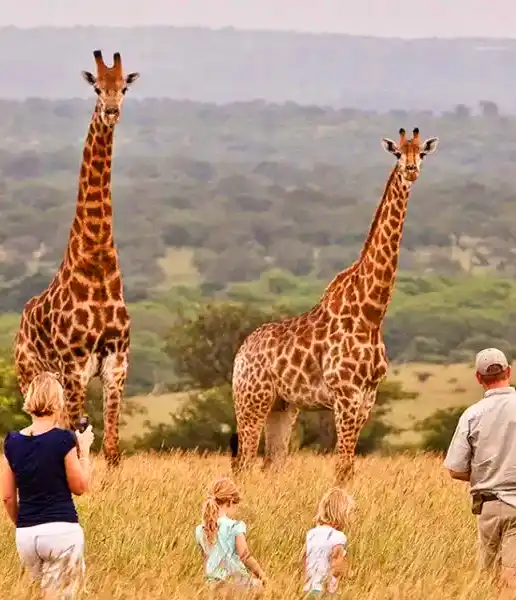
14 Days Family Safari
Arusha Arusha NP Tarangire Lake Manyara Serengeti Ngorongoro Zanzibar
From, per person$7,580
Tanzania safari
Good wildlife photography needs time at a sighting, a guide who reads the light, and a vehicle you can shoot from comfortably. Those three ideas shape this two-week itinerary for keen amateur photographers, built around the wildebeest crossings at the Mara River in the northern Serengeti.
We keep the pace slow on purpose. Two nights in Tarangire give you elephants and baobabs in warm evening light. A full day on the Ngorongoro Crater floor comes next, then three nights in the central Serengeti for predators and five nights near the Mara River, where the herds usually cross between about July and October. A charter flight from Kogatende back to Arusha saves a long drive at the end.
Tanzania Tourism Safaris provides a private 4×4 Land Cruiser with removable windows and one guide per vehicle who knows how to position for a shot. There is no cap on game drives, so you can be out at sunrise and stay in the field through the late-afternoon light. You stay in upscale tented camps and lodges on a full-board basis, with soft drinks and water on every drive.
Your driver meets you at Kilimanjaro International Airport for the private transfer of about 50 minutes to your lodge on the edge of Arusha. Nothing is planned for the rest of the day, so you can sleep off the flight, charge batteries and check your camera gear. Your guide will want to hear what you most hope to photograph, so it is worth drawing up a wish list over dinner.
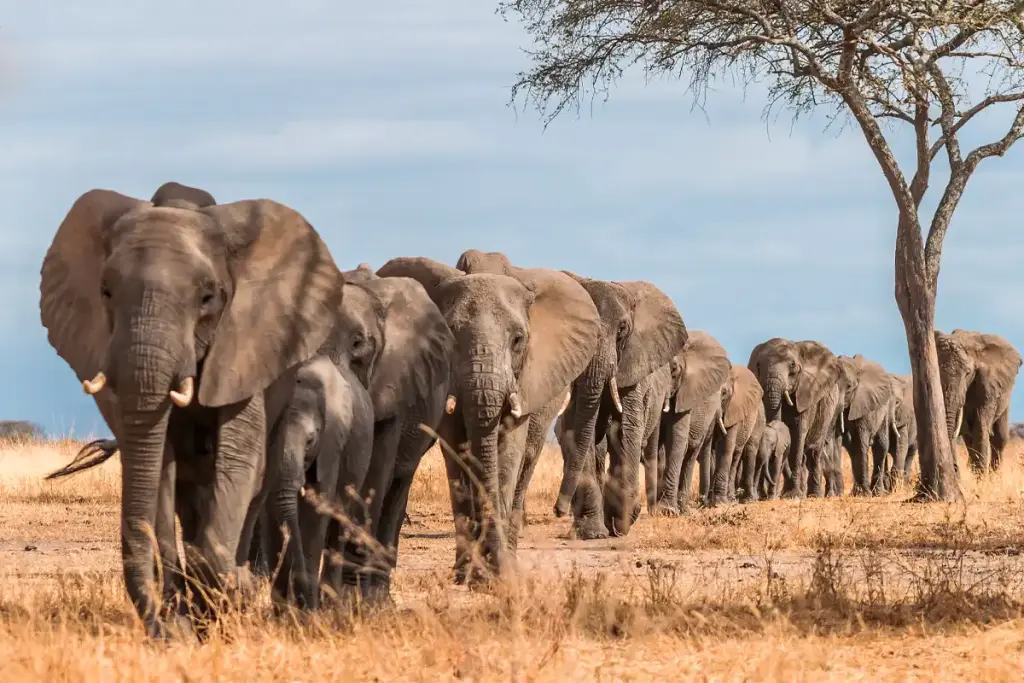
Leave after an early breakfast for Tarangire National Park, about two hours away. Game drive your way to camp, looking for elephant herds along the Tarangire River and the huge baobabs that make strong subjects against an open sky. After a break in the middle of the day, head out again in the afternoon, when the light softens and the big cats begin to stir.
A long day in the park with a picnic lunch means you can wait at a promising sighting rather than move on. Elephants coming down to the river make good subjects, and the park also has lions, giraffes, zebras and a wide variety of birds. Your guide can angle the vehicle for side light or a clean background, and the window openings let you shoot close to eye level.
Take one last morning drive in Tarangire, then set off for the Ngorongoro area, a journey of around three and a half hours. Pause at a viewpoint on the Rift Valley escarpment above Lake Manyara, a fine spot for wide landscape frames. Arrive in the highlands in the afternoon and spend the rest of the day resting and preparing your gear for an early start.
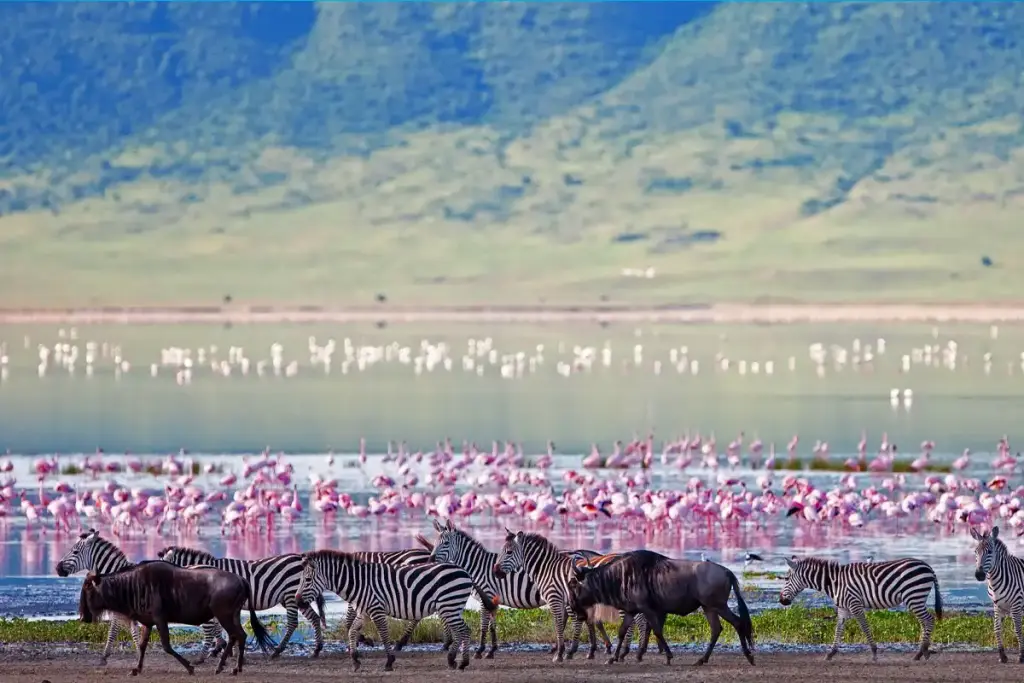
Descend into the Ngorongoro Crater soon after the gates open, when the light is soft and mist can still cling to the walls. Spend the whole day on the floor with a picnic lunch. Buffalo, zebra, wildebeest, hippo, lions and spotted hyenas are common, and black rhino are present in small numbers. The crater walls make a strong background for wide shots of the herds.
Cross the highlands and drop onto the Serengeti plains, a drive of about three hours plus time for game viewing. Watch for gazelle herds and ostriches as the grassland opens out. The short-grass plains suit cheetahs, and lions are often seen resting on the granite kopjes. Reach camp in the afternoon, then head out again for a sunset drive while the sky turns orange over the plains.
Be out at first light, when lions are often still active after the night and the low sun gives warm, raking light. The central Serengeti, around the Seronera area, has resident big cats all year. Return to camp at midday to rest, back up your images and recharge batteries, then go out again for the late afternoon. Hyenas and vultures at a kill can give you strong action sequences.
Today includes a visit to the Retima Hippo Pool, where crowds of hippos jostle for space in the water, giving you interaction shots and close-ups of yawning bulls. Spend the rest of the day along the Seronera River, a good place to search for leopards resting in the trees. Finish with one more sunset session on the central plains before dinner.
Pack up and drive north, about three hours plus time for wildlife along the way. The landscape changes as you go, from open plains to rolling hills and woodland. You reach your camp in the north in the afternoon, and your guide explains how the herds behave at the river, where crossings tend to happen and how to be ready when they start.
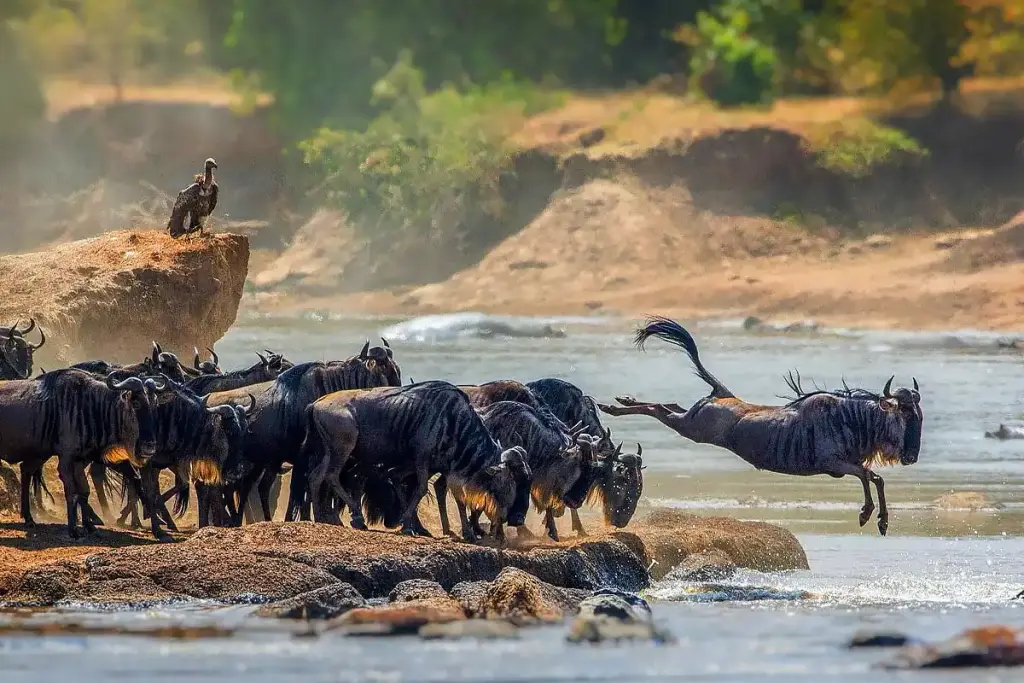
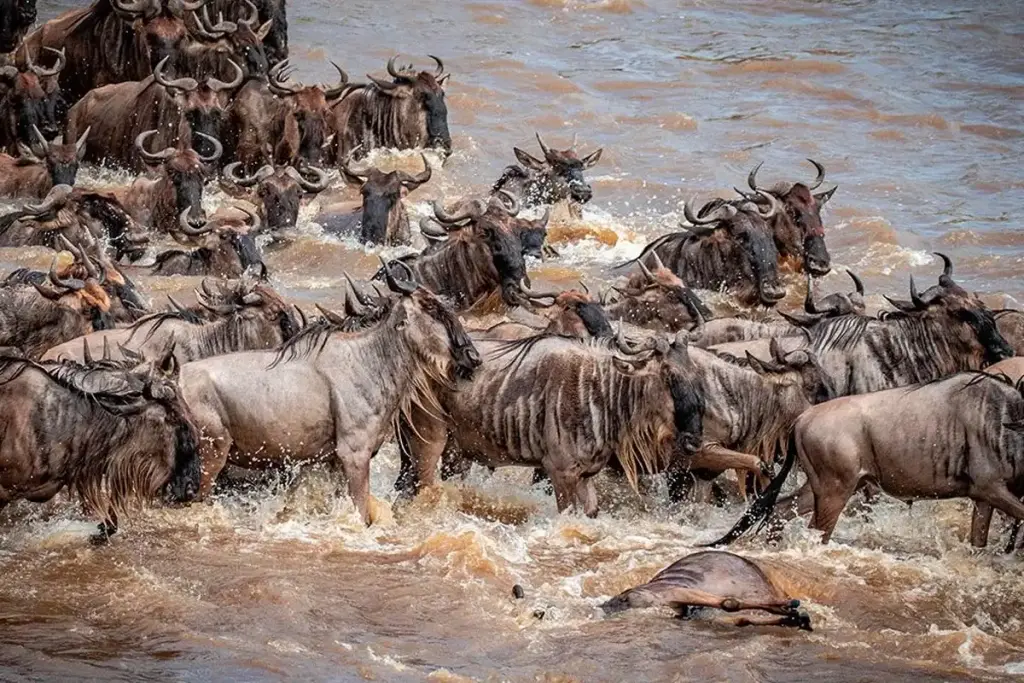
In the crossing season, the day revolves around the wildebeest. Herds gather on the bank, sometimes for hours, before the first animal jumps and the rest follow in a rush of dust and spray. Your guide picks a spot with a clear view, and then you wait. It is worth it. Crocodiles wait in the water. Morning and afternoon drives give you two chances at the action, with a rest in camp between them.
No two crossing days are alike. Some days the herds cross several times; on others they mass on the bank and then turn back. Use the waiting time to photograph the details: rising dust, zebras mixed in with the wildebeest, vultures in the trees, crocodiles lying in the sun on sandbanks. Your guide stays in radio contact with other guides to hear where herds are building up along the river.
Give the river a rest for part of the day and explore the wider north. The hills and open plains here hold lions, cheetahs, elephants and giraffes, and the long golden hour before sunset is ideal for wide scenes and animal portraits. Your guide keeps an ear on the radio, so if a crossing starts to build, you can head back to the river quickly.
Spend your final full day wherever the action is best, whether that is a crossing point on the Mara or a pride of lions nearby. Take time over lunch to review your images with your guide and decide which shots you still want, then go after them in the afternoon. In the evening, enjoy a final dinner in camp and pack for tomorrow’s flight.
A short drive takes you to the Kogatende airstrip for a charter flight back to Arusha, with wide views of the Serengeti and the highlands below, so keep a camera handy by the window. In Arusha, enjoy a relaxed lunch in town and a last chance to talk through your favorite images before your private transfer to Kilimanjaro International Airport, in good time for your flight home.
Per person in US dollars. The price depends on when you travel and how many travelers share the trip.
| Season | 1 traveler | 2 travelers | 4 travelers | 6 travelers |
|---|---|---|---|---|
| Low season 1 Mar – 31 May | $12,667 | $10,028 | $9,727 | $9,326 |
| High season 1 Nov – 20 Dec and 6 Jan – 29 Feb | $14,074 | $10,556 | $10,028 | $9,517 |
| Peak season Now 1 Jun – 31 Oct and 21 Dec – 5 Jan | $17,596 | $11,729 | $10,556 | $9,711 |
The herds are usually in the northern Serengeti from about July to October, and that is when crossings at the Mara River are most likely. Even then they depend on the animals, so no single day is guaranteed. If you travel outside those months, ask us to reshape the plan toward where the herds are likely to be.
No. The trip suits keen hobby photographers of any level, from those shooting on a phone or compact camera to people with long lenses. Your guide helps with positioning and timing. The pace simply gives you more time at each sighting than a standard safari would.
A telephoto lens in the 100–400 mm range covers most wildlife, and a wider lens helps with landscapes. Bring spare batteries, plenty of memory cards and a beanbag to steady the lens on the window frame. Dust is common, so pack a blower and cleaning cloths, and remember the charter flight has strict luggage limits.
Where you will go
You might also like
Arusha Arusha NP Tarangire Lake Manyara Serengeti Ngorongoro Zanzibar
From, per person$7,580
Arusha Arusha NP Tarangire Lake Manyara Serengeti Ngorongoro Zanzibar
From, per person$7,995
Arusha Tarangire Lake Manyara Ngorongoro Central Serengeti Northern or Southern Serengeti Zanzibar
From, per person$6,051
Arusha Tarangire Serengeti Ngorongoro Arusha Zanzibar east coast Stone Town
From, per person$4,357
Tripadvisor reviews
Excellent Trip of a Lifetime
Our family had the trip of a lifetime over the holidays. Our guides were amazing and always checked to make sure that we had everything we needed. In less than 2 weeks we got to do a short safari in Ngorongoro Crater, did a family visit as part of the cultural experience (my kids are still talking about how good the food was!!), visited Moshi for shopping, went to Dar Es Salaam and did a 2 day trip to Zanzibar. The logistics were all very smooth and the guides added humor and levity to the entire trip. We were in good hands and will never forget the hospitality shown to us while there. The best thing about the packages is that you can work with the team to tailor it to your exact timeline. We had to get back to work and school so opted for a short Christmas trip but we'll eventually go back to do a longer summer trip. Forever indebted for such a great experience!
Trip of a life time!! But why not go back?
BEST VACATION!!!! Eye opening, amazing, Beautiful and REAL. The safari was my favorite part. Seeing animals you learn about and dream of seeing right in front of your face. The food was great I ask you to be open and not get your norm. Safe? Yes. Of course there’s times you question a new country, area and people. There was never a moment I was in question of people or my surroundings. Next time I’m bring my kids they’re older and can help pay… hahaha. I heard it’s best not to go during the rainy Season it’s just easier and more enjoyable to get around. Just what people have said.
Great experience
Had a wonderful Safari experience in Nothern Tanzania. Got to see some Lions very closely. Best experience in a very long time tbh.
It was an amazing experience!
Awesome experience! Beautiful and exciting destination full of nature! We went during fall but anytime of the year is recommended. Planning for my next trip there!